
Helicopter, air tanker, fire engine, drone: what each one is for
The fire nobody was allowed to walk up to
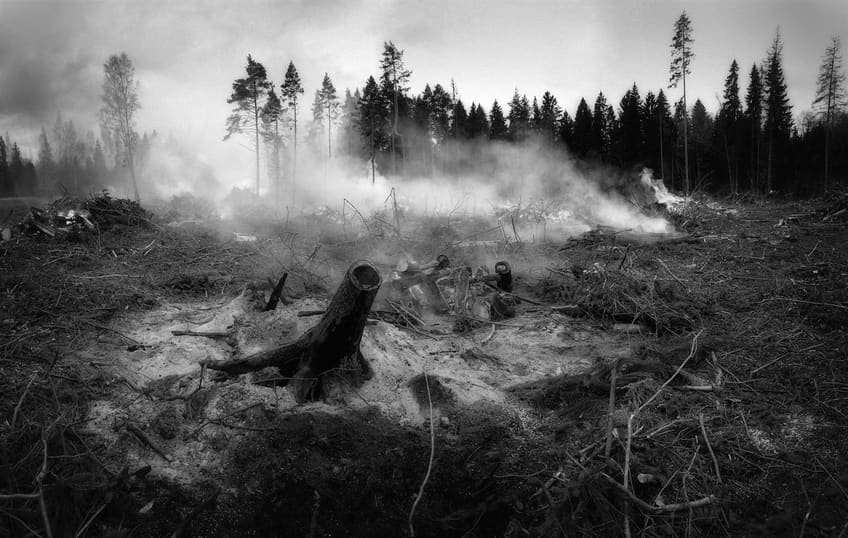
On 13 July a fire started in the Müritz National Park, on a stretch of old army training ground. When crews first measured it, it covered a little over 20 hectares. That is a fire you can still draw a line around.
They were not allowed near it. The soil there is still full of unexploded shells from the years the army used the site, so the fire service had to hold a distance of a thousand metres. On 15 July the Nordkurier reported the district's position plainly: the crews could not get to the fire. By that day 118 hectares were burning.
One thing kept working above it. A team from the district's cadastral office flew drones from the Käflingsberg tower southeast of the village of Speck, from six in the morning until close to midnight, for weeks. The rules for flying over that ground are not the rules for standing on it. They tracked the fire and measured how far it had moved.
They could not put a single litre of water on it.
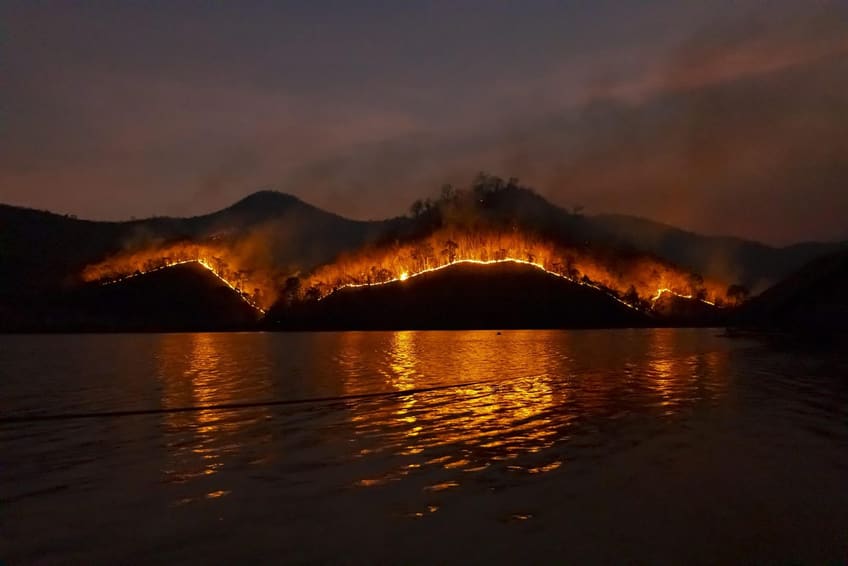
By the end it had burned close to 400 hectares, about one per cent of the national park. Hundreds of people worked on it. The German air force sent two heavy helicopters and dropped roughly 1.58 million litres in three days. Nobody made an obvious mistake, and it still went from 20 hectares to 400.
Firefighting equipment usually gets compared by how much water it carries. The more useful question is what can reach a fire while it is still small. Müritz is a case where almost nothing could.
Five ways to compare them
Any comparison worth reading states its criteria. How long until something lands on the fire. What one call-out costs. Where the tool can go, and where it is allowed to go. How many people have to stand in danger. How much it carries.
One note on cost. Reliable public figures for the cost per flight hour of German firefighting aircraft are hard to find, so this piece gives none rather than estimating. None of the four tools wins on all five points, which is why the comparison is worth making at all.
| Fire engine | Helicopter | Air tanker | Drone | |
|---|---|---|---|---|
| Time until something lands on the fire | Quick to the last paved road. After that it is navigation, in forest, usually at night. | Minutes over ground a vehicle would need hours to cross. | Requested, moved, loaded and flown, from a base rarely close. A tool for the second day. | Reaches ground with no road to it quickly, and nobody has to find the way in first. |
| What one call-out costs | No figure given, for the reason above. | Enough that one is only called in an emergency. | No figure given, for the reason above. | A fraction of a flight with a pilot on board. |
| Where it can go, and where it is allowed to go | Where a road goes. | Over anything, including ground crews are not allowed to walk on. | Over anything, but from a base that is rarely near. | Ground with no road, and ground nobody is allowed to walk on. |
| People in the danger area | The crew, on foot, seeing what is in front of them. | The aircrew, overhead. | The aircrew, overhead. | Nobody. |
| How much it carries | Real volume, refillable, and it cools the ground rather than knocking the flame down. | More than anything on wheels could bring in the time. Water from height spreads, and some is gone before it lands. | More per run than anything else here. | A small tank. Against a developed fire it is useless, and dry powder does not cool the fuel underneath. |
| The job it actually covers | The fire you can drive to, and the hot spots and the wetting down afterwards. | A fire that has already got away. | The backbone of the air response around the Mediterranean. In a German district, the second day. | A small fire, in the first minutes, somewhere nothing else reaches in that time. |
The fire engine
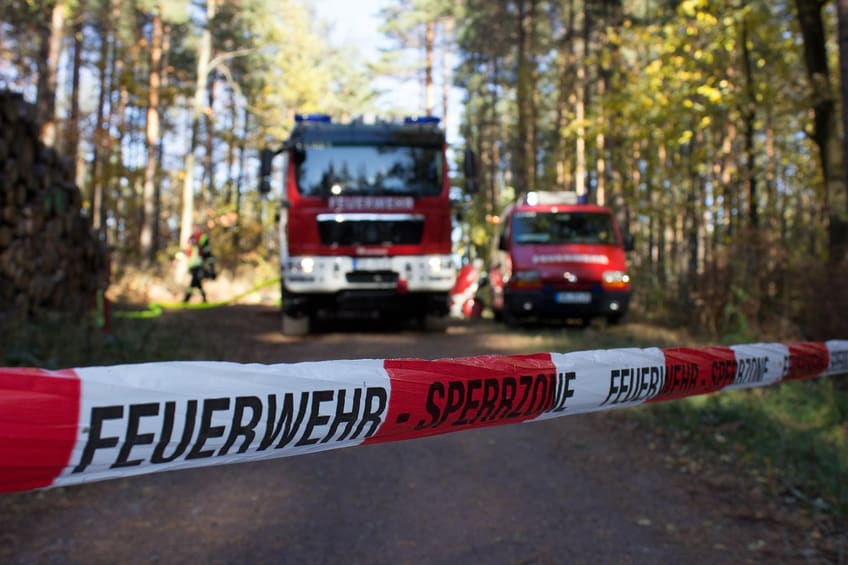
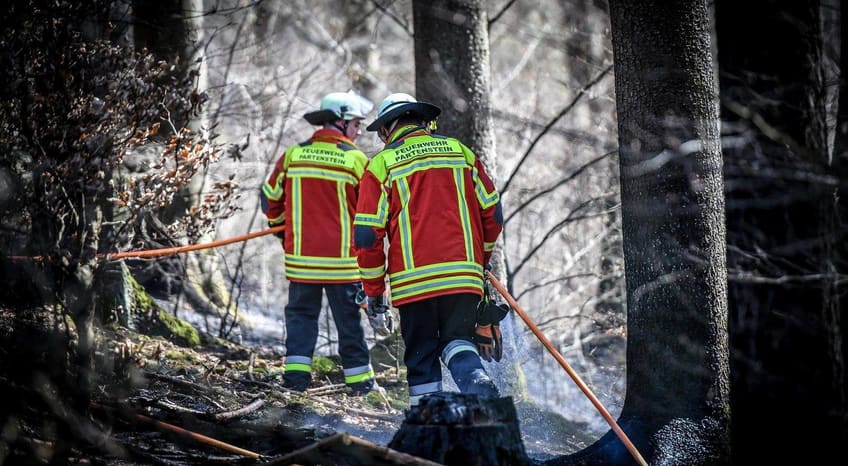
Where a road goes, nothing else comes close. A fire engine brings real volume, it can be refilled, and it cools the ground rather than just knocking the flame down. The crew can see what is in front of them and change the plan while they work, which no aircraft can do. The hot spots and the wetting down afterwards happen on foot anyway.
The vehicle is fine. The road is what runs out.
A fire officer in Berlin with forty years of service described it this way, and the same complaint comes up often enough that it is not a one-off:
The biggest delay is not the alarm. It is finding the way through the forest. Crews end up searching for the fire themselves, and hours pass before they arrive. Paraphrased from an interview.
The alarm is quick. The drive to the last paved road is quick. After that it turns into navigation, in a forest, usually at night. Forest rescue points help crews meet each other. They do not lead anyone to the fire.
The helicopter
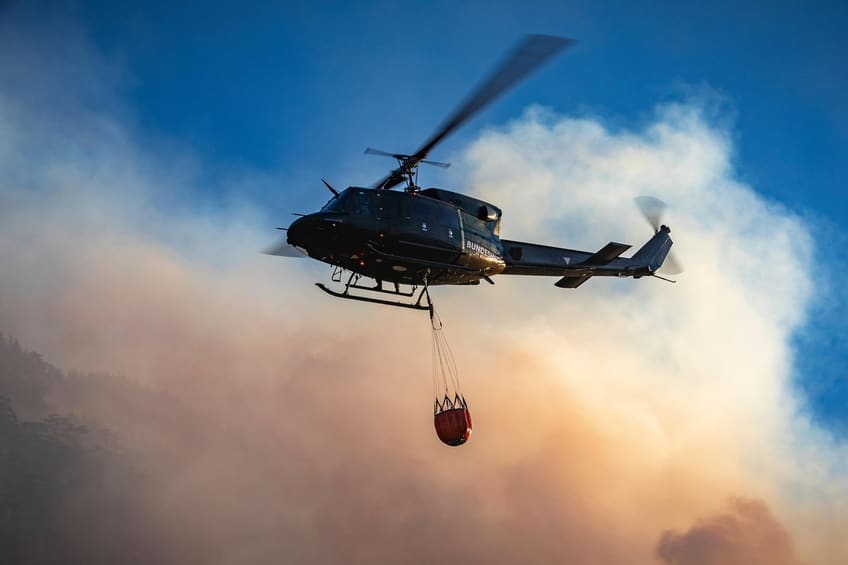
Once a fire is large, this is the tool that changes the outcome. A helicopter covers in minutes what would cost a vehicle hours, and it arrives carrying more than anything on wheels could bring in that time. Over Müritz the two air force machines flew 316 times in three days, and the national park later credited those crews with turning the fire around.
The founder of an aerial firefighting company in Athens, who has spent years around this work, is blunt about the trade-off:
Water dropped from high up misses most of the fire. And every flight costs so much that helicopters are only called in an emergency. Paraphrased from an interview.
Water falling from height spreads out, and some of it is gone before it lands. That is how the method works, and it is why the helicopter belongs to the part of the fire that has already got away. Nobody calls one out for a fire twenty metres across. By the time the cost is easy to justify, the cheap version of the problem is gone.
The air tanker
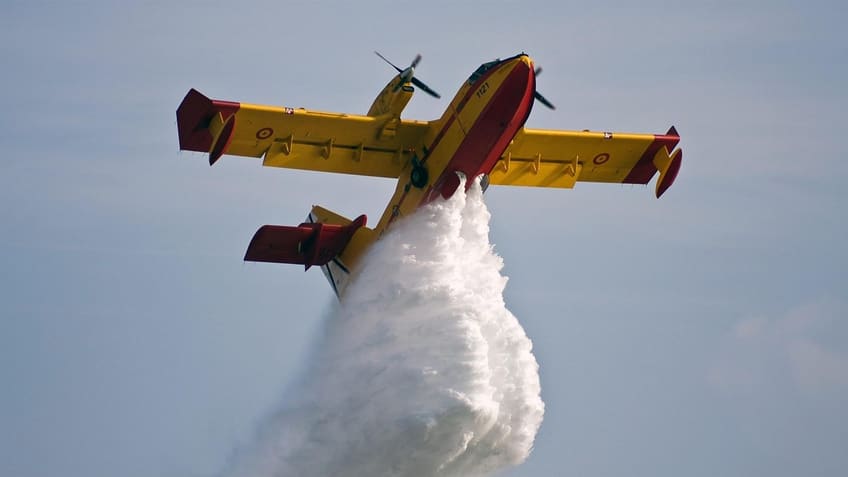
Aircraft carry more per run than anything else here. Around the Mediterranean they are the backbone of the air response. In a German district, in the first hour, they barely matter. The plane has to be requested, moved, loaded and flown, and the nearest base is rarely close. This is a tool for the second day, and by the second day the argument is lost.
The drone
Take the limits first, because they define the job. The tank is small. Against a developed fire it is useless. Dry powder puts the flame out without cooling the fuel underneath, so the fire can come back and someone still has to walk that ground later.
Müritz shows that too. Weeks after the fire was declared under control, drones over the burnt area were still finding hot spots at up to 160 degrees. A fire that looks finished very often is not.
The other half holds up. A drone reaches ground with no road to it, quickly, and nobody has to find the way in first. Nobody stands in the danger area. One flight costs a fraction of a flight with a pilot on board, and it scales by flying again rather than by carrying more.
That leaves a narrow job: a small fire, in the first minutes, somewhere nothing else can reach in that time.
The gap
Which brings this back to Müritz, where the size of the fire was never the interesting part.
One thing is worth being clear about, because it cuts against the easy version of this argument. The helicopters were not grounded. They flew, they worked, and the record says so: 316 flights and 1.58 million litres. The thousand-metre distance applied to crews on the ground, not to aircraft passing overhead.
Which is what makes the hole easy to see. For weeks there was ground no person could walk onto. An uncrewed aircraft sat above it almost continuously, and all it could contribute was information. Everything that reached the fire came from altitude, hours apart. When the fire was finally under control, the munitions clearance service estimated another two weeks before anyone could set foot on it.
The drone was the only thing that could be there early and stay there. It arrived with nothing to give.
What this changes
A drone does not replace a helicopter, and it does not replace a fire engine. Anyone who has watched either of them work already knows that.
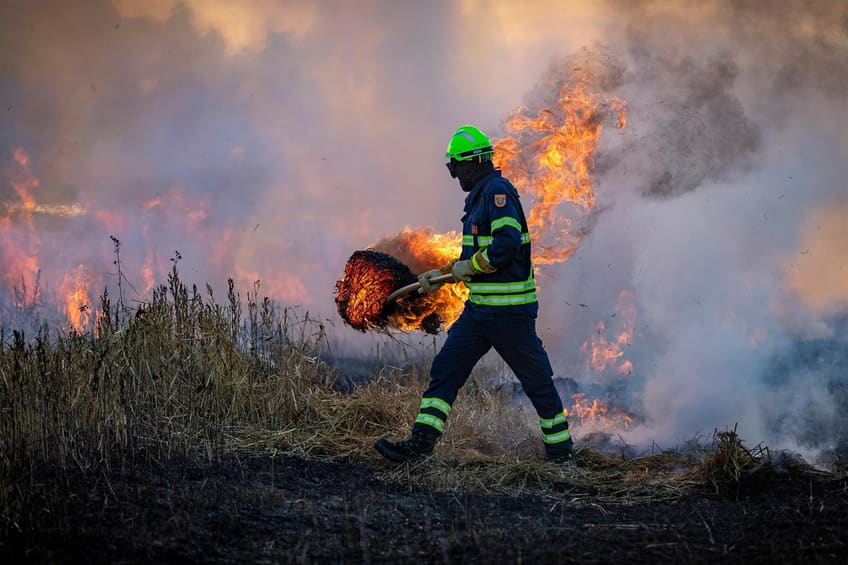
What it covers is one window that nothing covers today. The first minutes, in a place nobody reaches in the first minutes, because there is no road or because nobody is allowed. Get that window right and most of what follows never has to happen. Get it wrong and the rest is damage limitation, done by the same people as always.
Check your own ground
Averium Dynamics runs a free size-up tool. Mark a place on the map and it shows the slope, the likely direction the fire will run, the wind, and the nearest fire stations. No login, nothing to sign up for.
Questions about a particular district or forest: info@averiumdynamics.com.
Sources
- Nordkurier, 15 July 2026: the thousand-metre distance and 118 hectares burning. nordkurier.de
- Nordkurier, 4 August 2026: just over 20 hectares at the start and almost 400 at the end, and the district drone team flying from the Käflingsberg tower southeast of Speck. nordkurier.de
- German armed forces, joint operations command: two CH-53 helicopters, 16 to 18 July 2026, 316 flights, around 1,580,000 litres. bundeswehr.de
- Müritz National Park: around 400 hectares of the park's 32,200, the burnt area still closed because of unexploded shells, hot spots up to 160 degrees, and roughly two more weeks before crews could return. mueritz-nationalpark.de
Both quotes are paraphrased from interviews, so they are not word for word.
Disclosure: Averium Dynamics develops firefighting drones. The limits set out in the drone section are the ones that constrain that work.
Photographs from Pixabay, used under the Pixabay Content Licence: ojkumena, sippakorn, royber99, fish96, magocarlosyo, viya0414 and benerott. None of them shows the Müritz fire.
Supported by